
Hosting my church group every week, plus every major family gathering and shower for the last 20 years, has taught me some things. While a beautiful home is certainly a plus, the secret to making guests feel welcome has very little to do with your throw pillows.
It has everything to do with how you make people feel!
After years of opening my door to groups of all kinds, these are the five habits that made the biggest difference—and a few simple decor items you can add to your space to make your guests feel at home.
1. Your energy sets the tone.
Guests feed off your vibe. When a host is nervous or visibly anxious about the space, guests pick up on it. If you’re constantly apologizing about the state of things, rushing about, straightening everything, or are otherwise finicky, they become self-conscious, start monitoring their own behavior, and leave a little earlier than they otherwise would.
The antidote is confidence. When you move through your home comfortably, not hovering or apologizing, guests follow your lead. Your ease permits them to feel at ease, too.
That said, knowing your guests matters. Hosting your partner’s new boss calls for a different read than hosting your closest friends for the hundredth time. But even in formal situations, people respond better to warmth and a genuinely open spirit.
Give yourself permission to relax into your own gathering. Feet on the couch happen. Shoes end up inside. Someone will set a drink near the rug. When you let those things go, your home starts feeling like a place guests can exhale in.
Small Habits That Keep the Mood Easy
Keep things tidy but not fussy; a lived-in home feels safer than one that looks staged.
If something spills or breaks, laugh it off. Your reaction sets the tone.
Say it when guests walk in: “Make yourself at home.” Mean it.
A lit candle or scented diffuser running before guests arrive is an easy way to set a relaxed tone.
2. Food is non-negotiable.

Food does something no amount of decor can replicate. A spread on the counter gives guests somewhere to gravitate, something to do with their hands, and a reason to start talking. People cluster around food naturally, and that clustering is where conversations begin. Nobody should have to ask whether there’s something to eat or drink. If guests are wondering, you’ve already created a point of awkwardness.
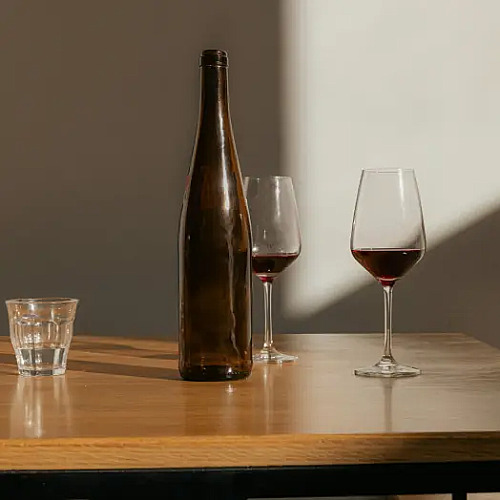
Snacks are a minimum, even if you’re serving a full meal later. I keep a well-stocked coffee bar and drink cart separate from the kitchen in an open common area where people feel free to walk up and help themselves. A dedicated drink fridge in a shared space works the same way. When guests can see what is available and understand it’s there for them, they relax. And that relaxation spreads.
The self-serve setup takes pressure off you, too. Nobody waits to be offered anything, and you’re not running drinks all evening.
Setting Up a Self-Serve Spread
Set up the coffee bar and drink station before guests arrive so that nothing needs explaining.
A thermal coffee carafe keeps coffee hot for hours, so you only brew once.
For more formal gatherings, consider labels (regular, decaf, oat milk) so guests can help themselves without guessing.
A tiered serving tray or wooden charcuterie board turns a simple snack spread into something people want to linger around.
Replenish the snack basket at the halfway point of a long gathering.
If serving a meal, consider having everyone bring an appetizer or dessert. This allows sharing of recipes and makes people feel involved.
3. Design for conversation, not presentation.
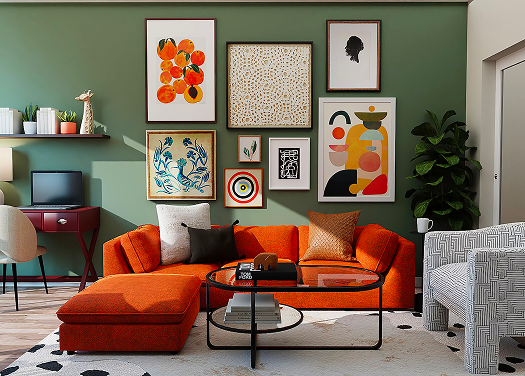
Most living rooms are arranged for watching television, not for talking to each other. If you want guests to connect, the furniture has to invite them.
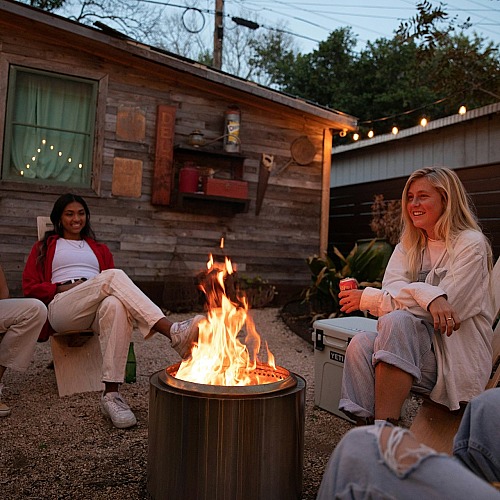
Think in clusters: a grouping of comfortable chairs near a big window, a circle of cushions around a firepit, bean bags pulled toward the fireplace, a seating area under a shady tree in the backyard. People gravitate toward spots that feel engaging and comfy.
Lighting matters here, too. Overhead fixtures are flat and harsh. Layered light at seated height makes a seating area feel like a settling spot. Floor lamps, table lamps, and candles all do that job.
Sound is the other element people overlook. A relaxed playlist already running when guests arrive fills the silence naturally and makes every corner of the space feel alive. Keep the volume low enough for easy conversation, and let it run long enough that no one notices when it loops.
Staging the Space for Connection
Pull chairs away from walls, and angle them toward each other before guests arrive.
Floor cushions and poufs expand seating in any zone.
Apply the same intentionality to outdoor seating that you give your indoor spaces.
Switch on floor and table lamps before the first guest arrives, and dim or turn off overhead lights.
Queue your playlist before anyone knocks, and position a Bluetooth speaker centrally so it carries evenly without competing with conversation.
4. Give new guests a quick tour.
When someone visits your home for the first time, they spend the first few minutes trying to figure out where everything is. A quick walk-through puts them at ease.
Show them where the bathroom is, where the drinks live, and where they can leave their things. Let them know they’re free to wander. The tour takes three minutes and replaces that low-grade uncertainty with a sense of familiarity that carries through the whole evening.
If there are rooms you would prefer people stay out of, leave them off the tour, and keep the door closed. Guests will understand without being told.
The bathroom is worth a moment of extra attention, especially for overnight guests. Stock a small basket with travel-size toiletries, a spare toothbrush, some pain reliever, and a hair tie or two. It costs almost nothing but communicates everything.
Making the Tour Feel Effortless
Keep the tour under three minutes: bathroom, drinks, and a place to leave their things.
Do it immediately on arrival, before the conversation gets going and the moment passes.
A small “help yourself” card in the bathroom removes any awkwardness about guest amenities.
5. Make the outside work for you.
Welcoming guests starts before anyone reaches your front door. Make the route to your preferred entrance obvious and appealing. A welcoming rug, a row of pavers or solar lights, a small sign, or a line of potted plants leading the way all help guests know where to go. The outside of your home should feel like the beginning of the experience.
Curb Appeal That Points the Way
Solar path lights along a walkway are inexpensive and install in minutes.
Outdoor string lights or a pair of lanterns flanking the entrance add warmth.
Choose a doormat with real weight and texture; thin rubber mats undermine the effect.
If your preferred entrance is not immediately obvious, a small directional sign near the driveway eliminates confusion.
A Home People Come Back To
Welcoming guests into your home comes down to paying attention to how guests experience your space and a few strategic decor items that add function and comfort to your space.
Treat people like they belong, feed them well, give them somewhere comfortable to sit and talk, show them around, and make the route easy to follow from the drive in to the drive out. That’s the whole framework. Everything else will flow if you get these steps right.



Leave a Comment
Your email address will not be published. Required fields are marked *