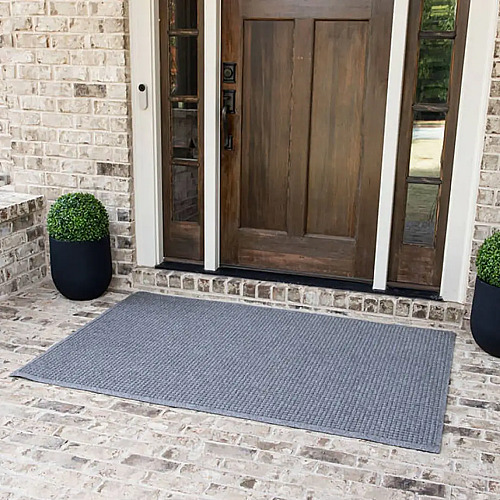
Every stay begins the same way. A suitcase rolls up the walk, and two or three pairs of shoes cross your threshold with whatever the sidewalk had on offer. On a booked calendar, that scene repeats every few days, so what looks like a home entry is really doing commercial work.
Hotels design around this kind of volume, and they lean on a common yardstick. The Carpet and Rug Institute (CRI) sorts commercial floors by traffic class, rating entryways heavy and lobbies severe. Nobody tells you that when you go live on the booking sites.
So the place gets furnished as a home and worked as a small hotel. If the only barrier between that traffic and your floors is a $20 coir mat from a big box store, swapped out whenever it starts looking shabby, you’re asking one of the cheapest things in the building to protect one of the most expensive surfaces in it.
What a Booked Calendar Does to Your Floors
Let’s start with how much traffic there is to price. AirDNA forecasts US short-term rental occupancy averaging 57.4% in 2026. Your entry will spend more nights hosting strangers than sitting quiet, and they probably aren’t wiping their feet the way you would at home.
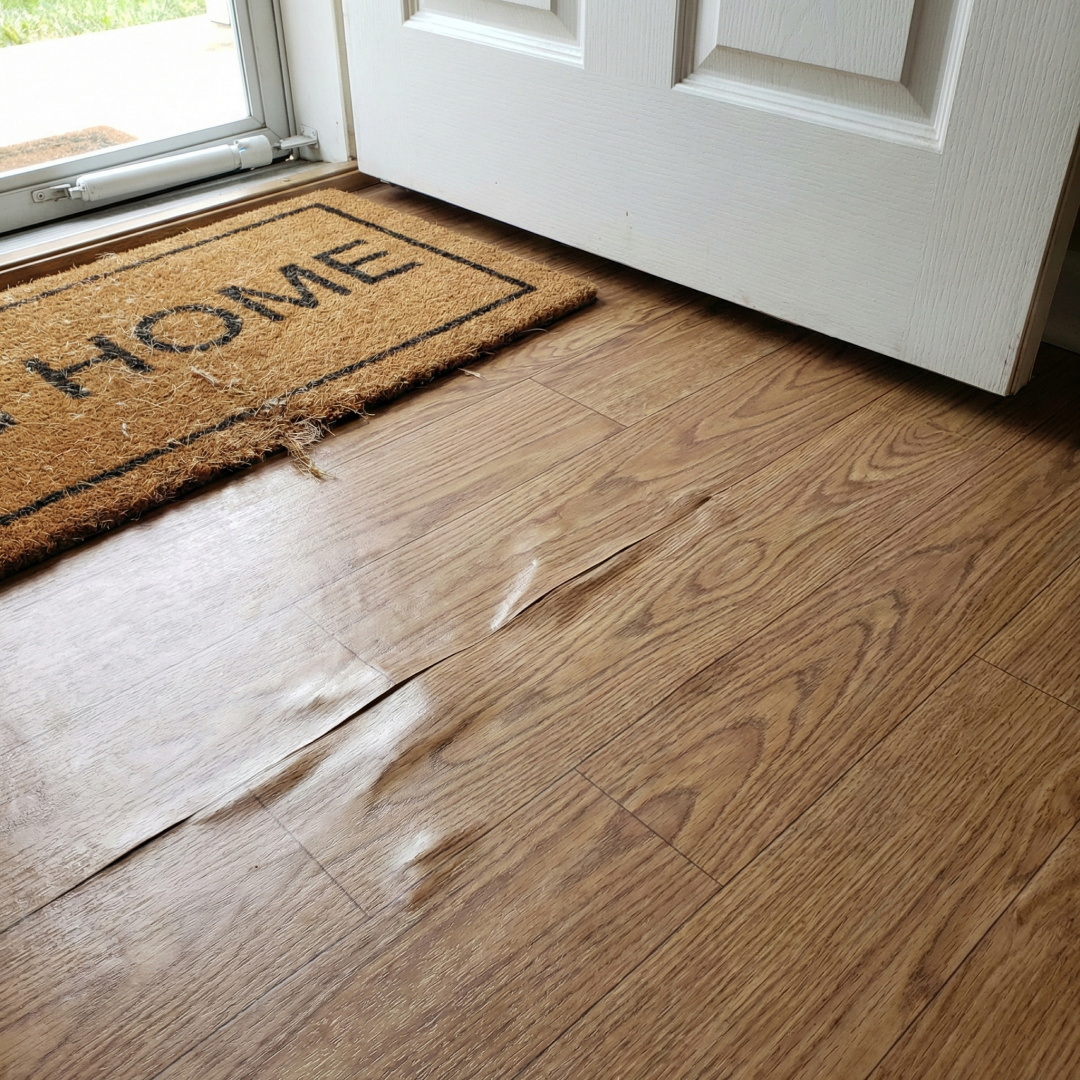
The grit they track in behaves like sandpaper underfoot. Standing moisture is the bigger threat, though, because a puddle sitting on a finish long enough turns into a contractor visit. Invoices addressing these issues will climb fast.
Angi’s 2026 hardwood figures put water damage between $8 and $100 per square foot, while hardwood repairs of every kind average $1,077. Vinyl is no refuge, either, with water damage running $200 to $1,200 and a single damaged section costing $150 to $400 to swap. Vinyl also carries its own rules about rubber.
Push it further, and the ceiling rises. HomeAdvisor tracks full restoration work at $3,868 typically. That kind of bill isn’t a line item until it’s an invoice, and the thing you’re trusting to hold it off cost $20.
Three Places the Damage Shows Up
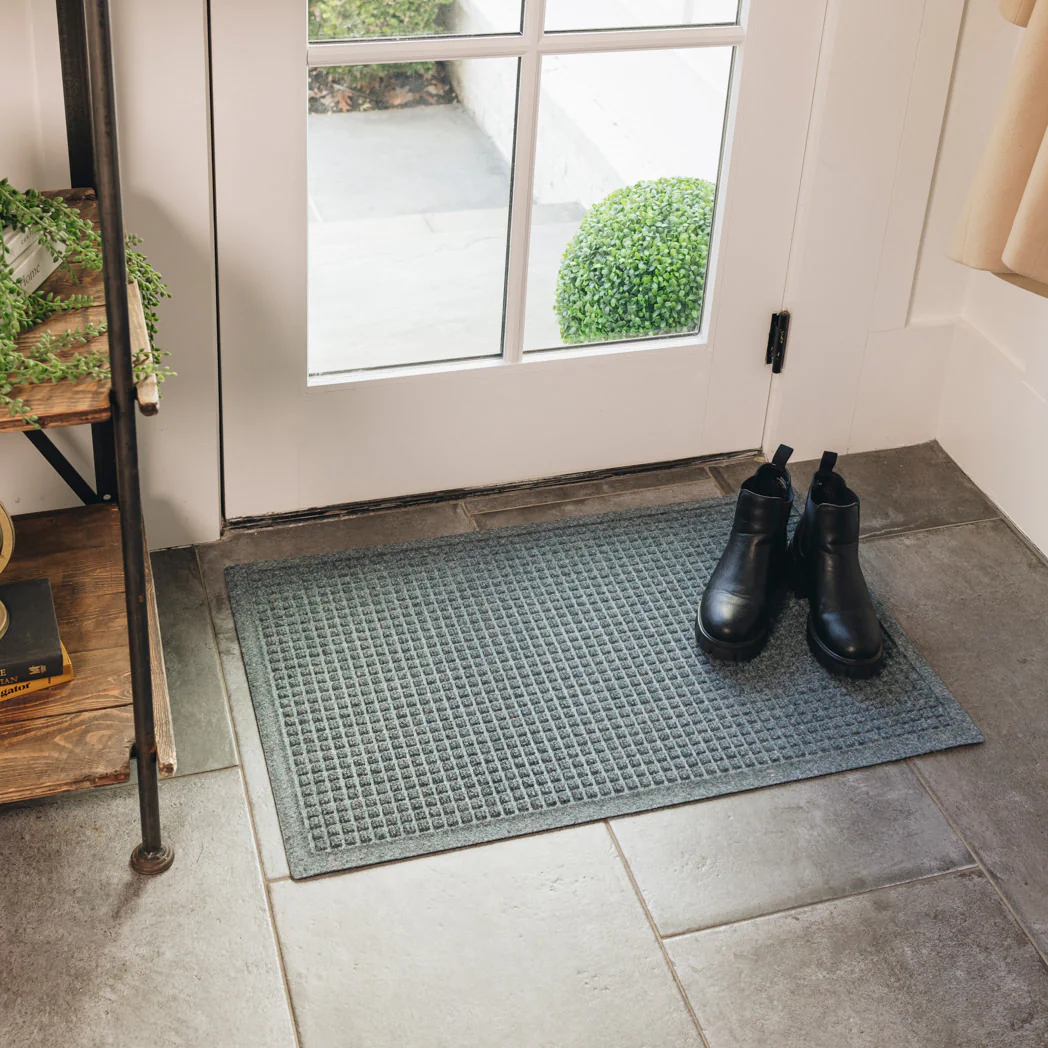
Knowing a bill is coming is different from knowing where it starts. Commercial facilities don’t rely on just one barrier to slow damage. The Carpet and Rug Institute’s maintenance standard pairs a coarse exterior mat that brushes soil off shoes with an absorbent interior mat that keeps tracked-in moisture off the floor. A single barrier at a single door does half that job.
Three stretches of a rental absorb the heaviest footfall, and each one wears in its own way. Walking them in order is the fastest way to see which one you’re leaving unprotected.
At the Front Door
Everything arrives here first. Whatever comes off a guest’s soles drops into the opening few square feet, and whatever clings on rides deeper into the property.
Sand and salt are the slow threat, abrading a finish a little with every pass. Pooled water is the quick one, working into seams and edges where a mop doesn’t quite reach.
A coir mat is the usual answer at this spot, and it’s fighting above its weight. Coconut fiber sheds loose bristles onto the floor, holds water rather than letting it drain, and dries slowly. Under a covered porch, the trouble stays manageable. Fully exposed, it doesn’t.
Down the Hallway
CRI found that matting that runs 12–15 feet past an entrance captures 80% of what gets carried in across the first five or six steps. Almost no rental puts matting past the threshold at all, let alone that far in.
The damage will announce itself as a traffic lane, a dulled path worn along the route people take through the room while the edges still look new. By the time you notice it, the abrasion has been building for a while.
On the Stairs
Stairs concentrate everything onto a narrow strip. Every trip up or down lands on the same nosing edge hundreds of times a month, and any grit tracked up from the entry grinds into that one spot rather than spreading out.
A safety question rides alongside the wear. Guests climb unfamiliar stairs tired, often at night and rarely with a free hand, which makes a slick or dusty tread a risk you own. Stair treads exist for exactly this.
The Three-Zone Setup
All three zones take the same fix: matting built for traffic placed at every one of them. WaterHog has been making exactly that since 1986, when it invented the bi-level doormat in Dalton, Georgia. Those mats went into airports, schools, and hospitals long before anyone put one on a porch.
The construction is why it has held up. Its surface fibers scrape debris off soles and drop it into recessed channels below tread height, out of the way of the next step. The raised water dam border holds over a gallon per square yard, keeping runoff from spreading past the threshold.
Once you’ve decided WaterHog belongs in your rental, sizing is the next thing to sort out:
At the door, a medium Squares Doormat ($45 and up) fits a standard 36-inch single entry, while a large covers sidelights and catches guests stepping to one side with their hands full. Double doors call for 60–72 inches.
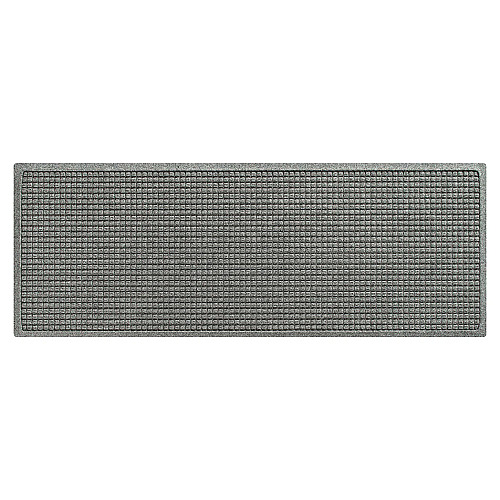
Down the hall, the Squares Runner ($99 and up) handles the inside stretch, sized from 22" x 60" up to 45.5" x 144.5". Reaching CRI’s 12–15 foot range takes one of the longer options.
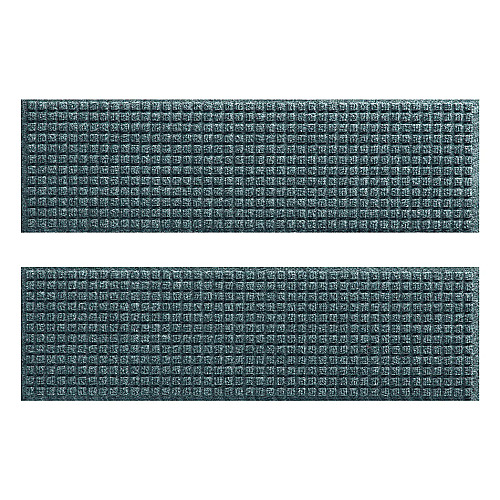
On the stairs, Squares Stair Treads ($35 for a pair at 8.5" x 30") carry the same construction down each step. Every mat WaterHog makes also carries National Floor Safety Institute High Traction certification, a rating for how firmly a mat’s backing grips the floor rather than sliding out from under a foot.
A Warning for Vinyl and Heated Floors
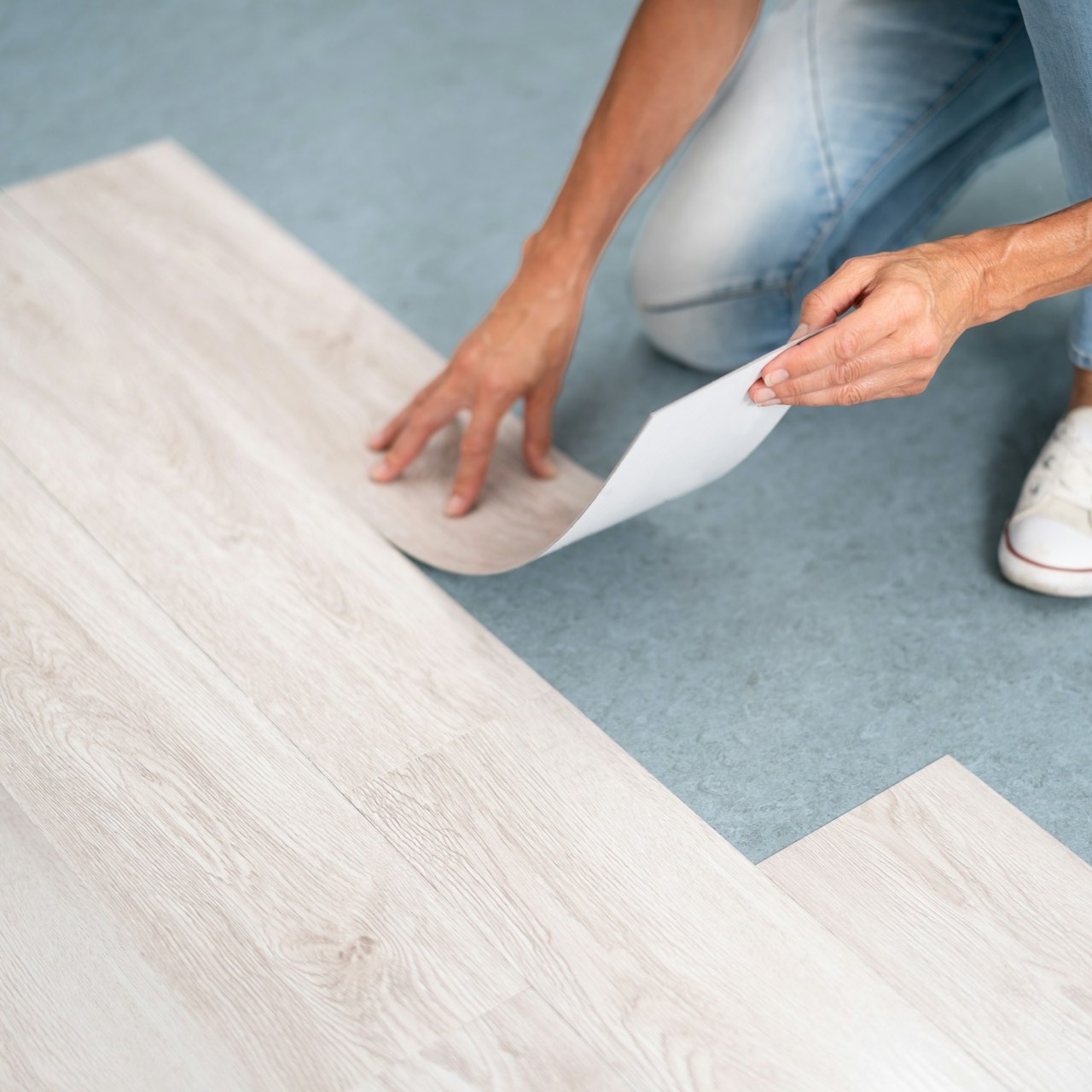
One thing decides whether any of that applies to you. Many rentals sit on budget luxury vinyl plank. Shaw’s vinyl care guide, for instance, tells owners to use mats without latex or rubber backings to reduce possible discoloration.
WaterHog engineers its own rubber compound with an anti-staining agent, tests every batch against internal guidelines, and reports that incidences related to its rubber are very uncommon. However, vinyl formulations vary widely enough that reactions can be unpredictable, so WaterHog doesn’t guarantee any specific floor.
So if the property has LVT, LVP, sheet vinyl, or vinyl tile, check your flooring manufacturer’s care guide first. Some vinyl contains plasticizers that can leach out and react with rubber, which may cause discoloration. If yours says avoid rubber, heed it.
Vinyl aside, two other floor conditions rule out any rubber-backed mat:
Heated floors turn up in upgraded bathrooms, where prolonged heat can damage the rubber.
New flooring needs to cure completely before anything covers it.
Running the Numbers on Replacement
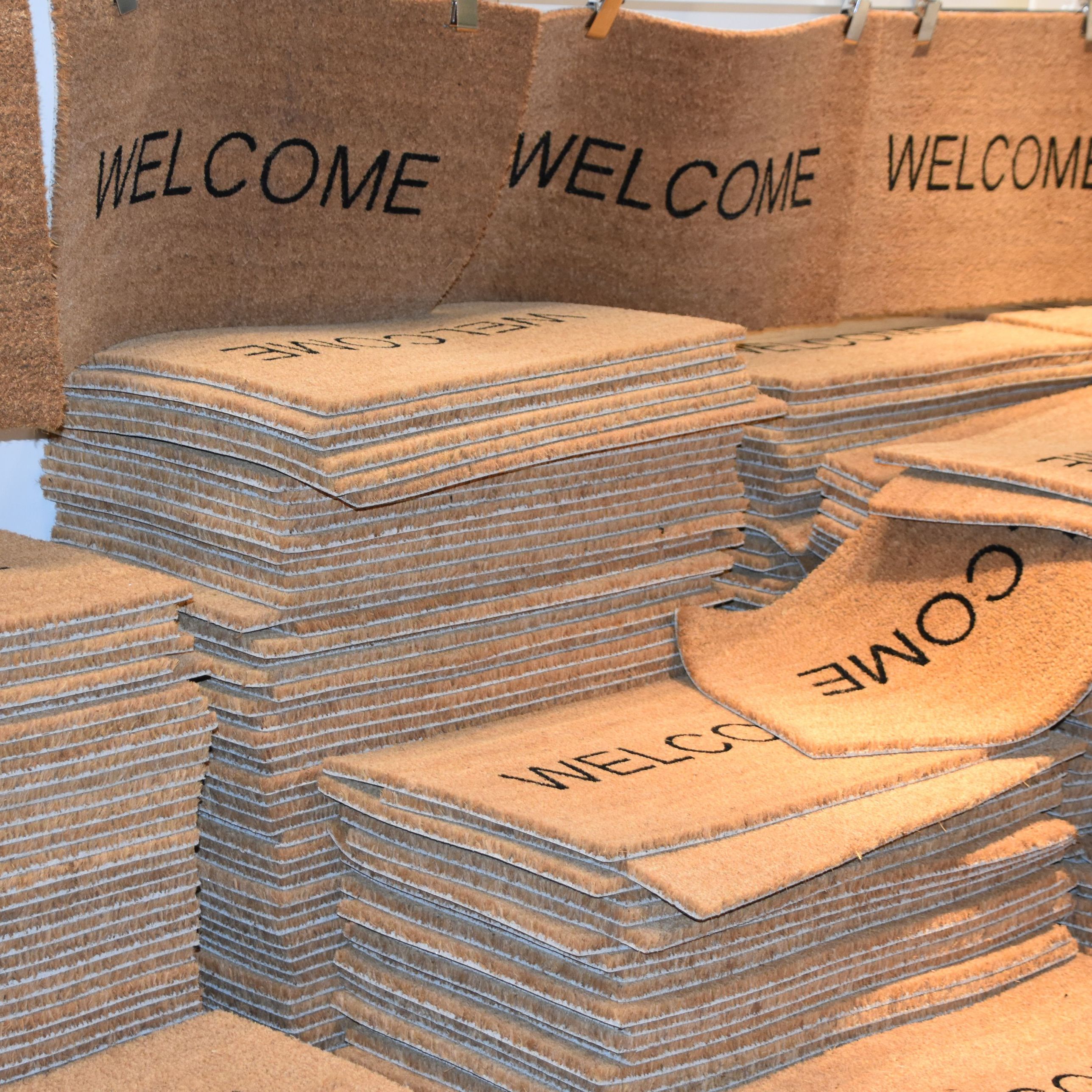
Three zones means three purchases, which is where the case for a $20 coir mat usually gets made. Here’s where the coconut fiber mat from the big box store crosses from thrifty into false economy.
For a coir mat, the wear that forces a swap comes sooner than most owners expect. In back-to-back rental use, exposed to weather at an uncovered entry, one hard season might be the whole run. Even a covered porch adds only so much time. Shedding starts on day one either way, so your cleaner will spend turnover time chasing loose strands around the entry.
Now hold that against $45 once. That’s the opening price on a Squares Doormat, and it lands you a bi-level build the brand has been refining in Georgia for four decades.
The rubber itself is engineered not to crack, rot, or crumble, and the surface and backing vulcanize together during molding rather than getting glued. The two layers don’t peel apart under heat the way budget constructions do.
Returns run 60 days from receipt, with return shipping deducted from the refund. So the comparison isn’t $45 against a cheaper mat. It’s $45 against that cheaper mat on repeat, for as long as you own the place.
Protection That Fits a Rental
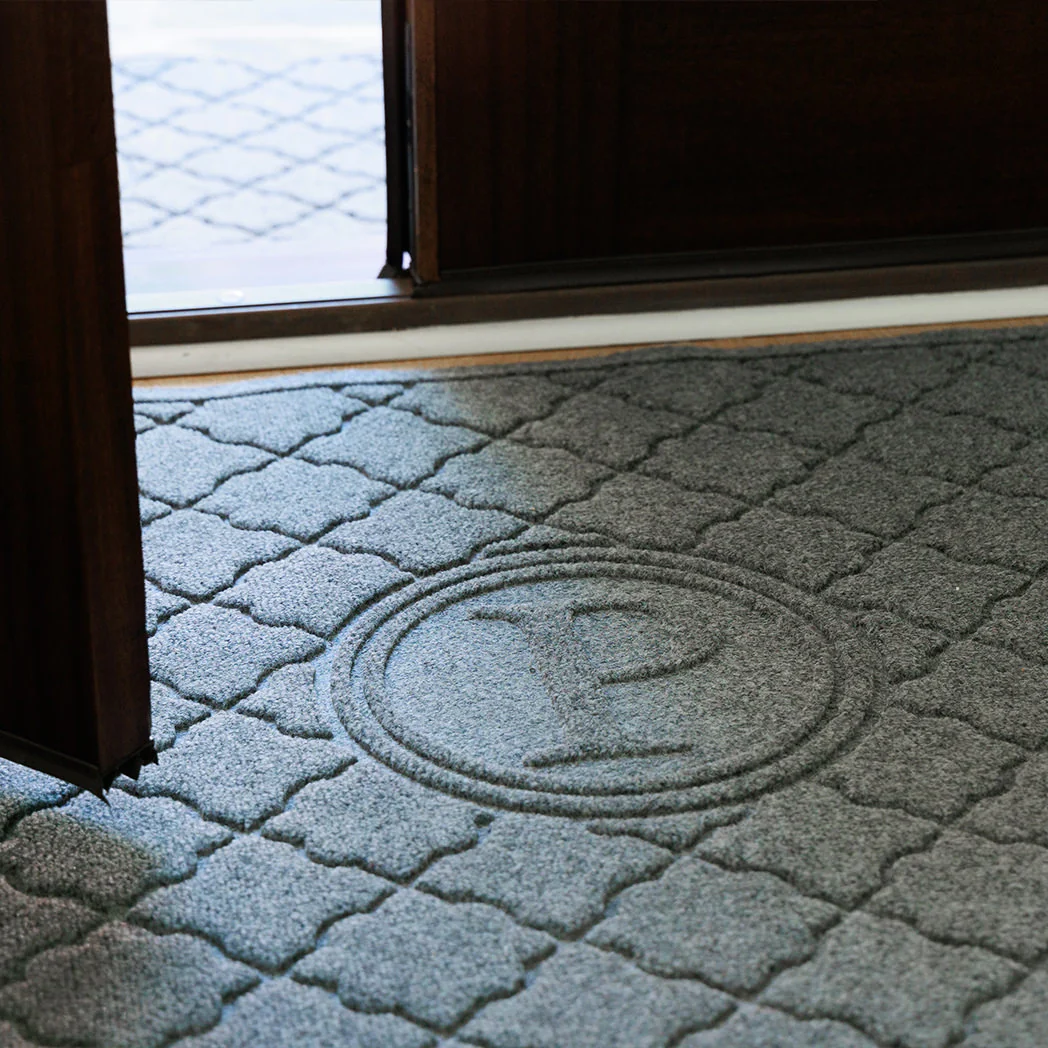
Durability settled, one worry usually survives. Commercial-grade looks the part. Your doorway is the first thing a guest sees, and a thick black slab reads more loading dock than vacation rental. With doormats standing just 3/8" tall and a stair tread thinner still at 1/4", WaterHog gets durability without a ton of bulk or losing the design elements that make guests feel at home.
The doormat finishes with an ADA-compliant beveled edge that lets a suitcase wheel roll through without catching. As for the stair tread, it sits so thin at 1/4" that it disappears against the nosing.
Options for Every Style of Rental
Their range is wide enough to match whatever you’ve built. Geometrics like the Squares Doormat, Diamonds, and Lattice sit comfortably in a downtown Chicago apartment where the entry runs to clean lines and dark wood. Argyle’s interlocking diamond and Cordova’s quatrefoil skew more formal, at home in a townhouse or a restored brownstone. Boxwood and Brittney Leaf turn botanical for a cottage or a lake house, and Beachcomber puts shells and starfish underfoot for a condo on the California coast.
The range does something else useful. Guests can tell when a mat has been chosen to suit the building, even if they never say so. Monogrammed versions push it further, setting a single letter into the same construction from $60.
Color does the rest. Eight core options span the line, each woven from several fiber shades: Bluestone, Bordeaux, Camel, Charcoal, Dark Brown, Evergreen, Medium Grey, and Navy. The palette stays understated next to a novelty print with a slogan across it.
Patterns hold together as well. Squares, Boxwood, Argyle, Lattice, and Ellipse each arrive as a doormat, a runner, and a tread, so one design can carry your whole entry sequence.
The Changeover Cleaning Routine
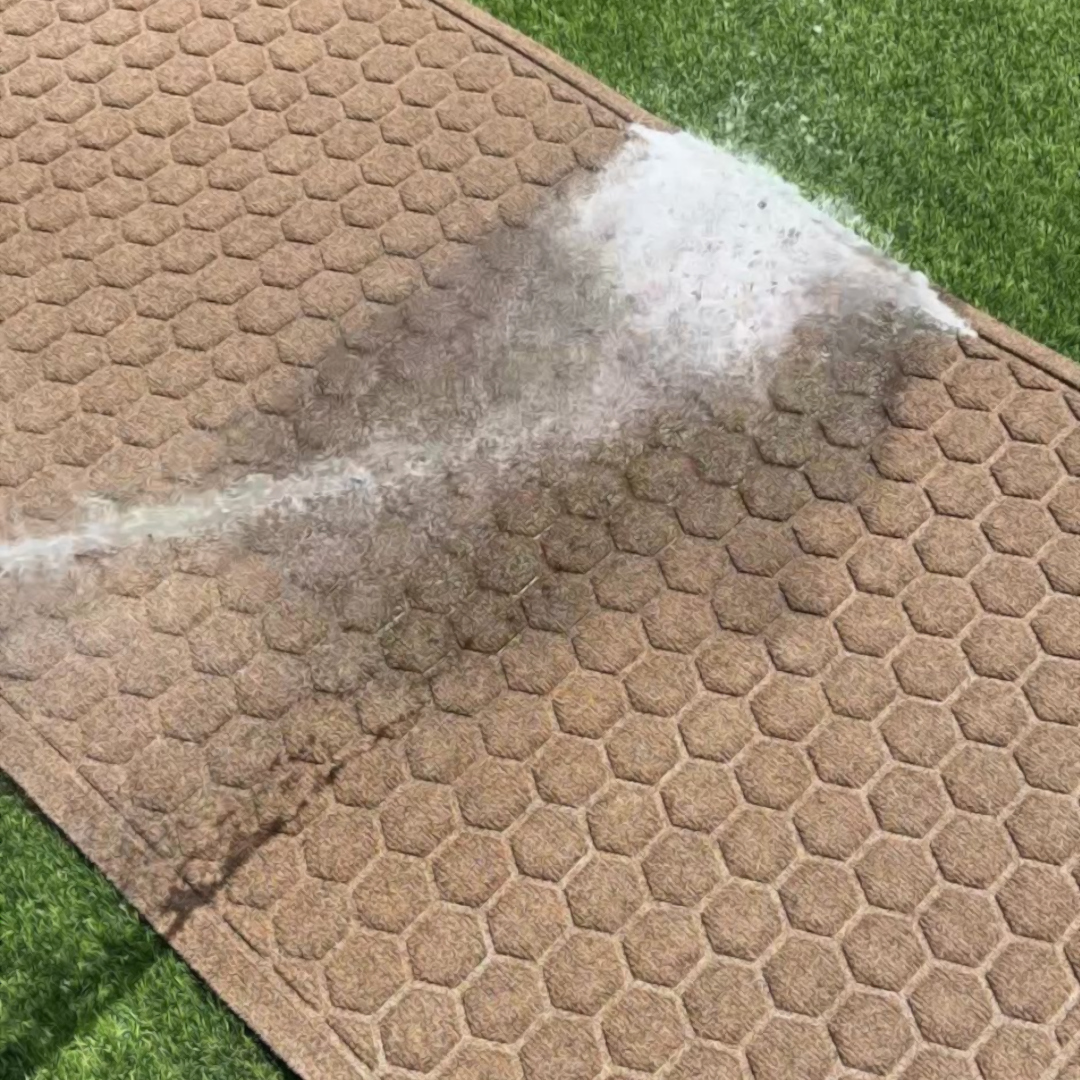
Caring for a WaterHog mat is what keeps the rest of the math working. CRI makes the point that matting needs servicing more often than the floor it protects, and that’s the step hosts skip. Here’s the whole routine, short enough to hand straight to your cleaner.
Between guests, shake it out hard, or sweep it. For pet hair, flip it and run a corded vacuum with the beater bar across the backing, then do the top.
After mud, knock the loose material off, hose it down, and let it air dry completely before it returns.
For stains, apply spot remover or mild detergent with a soft brush, wait 10–15 minutes, then rinse well.
For pressure washing, use soap first, a 40° white nozzle, a 2,000 psi ceiling, and hold the wand at least a foot back.
Every few weeks, lift the mat, clean underneath and behind, and give the surface below a chance to ventilate.
Avoid bleach and petroleum-based products, both of which attack the rubber.
After mopping with any solution, clear the residue, and let everything dry thoroughly before laying anything on top since trapped chemicals can react with a finish. Should discoloration ever appear, pull the mat immediately.
Where the Doormat Math Lands
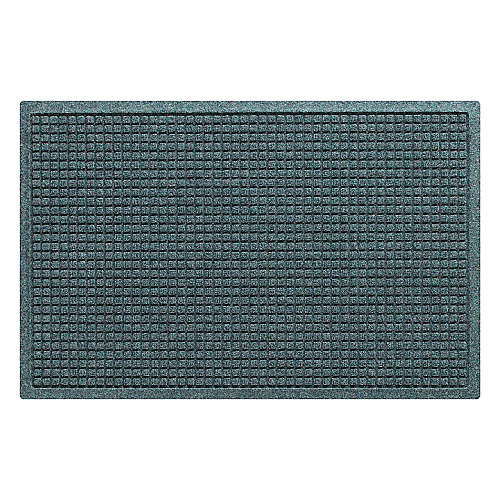
Every one of those bookings brings the same load through the same doorway. You either intercept the wear at the threshold or pay a contractor to undo it later. A pair of Squares Stair Treads runs less than a single square foot of hardwood repair. Buying once at each of the three zones replaces the coir-mat cycle with a fixed cost, and the sand, salt, and standing water that grind a finish down get stopped at the threshold rather than carried across it.
The Squares Doormat starts at $45, the runner at $99, and treads at $35 a pair. Verify your flooring’s care guide permits rubber, then let the whole category drop off your replacement schedule.
All product details, pricing, and availability were verified at the time of publication and may change without notice. Please confirm current information before making a purchase.





Leave a Comment
Your email address will not be published. Required fields are marked *