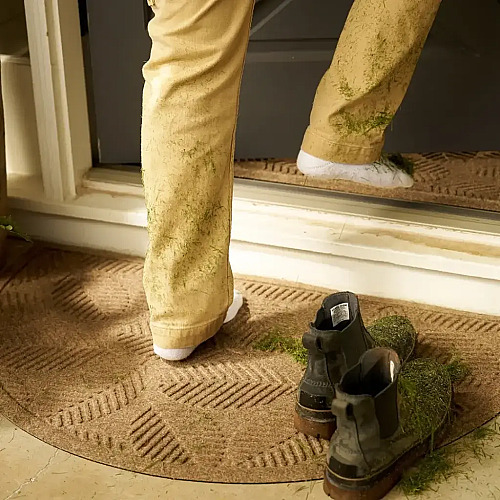
When Robb Andersen developed the WaterHog in Dalton, Georgia in 1986, he wasn’t thinking about front porches. His bi-level design was made for the places that punish floors hardest: offices, restaurants, hotels, where hundreds of muddy shoes land every day. It scraped, trapped, and drained better than anything else out there.
Then homeowners noticed. A mat tough enough for a hotel lobby looked right at home by a front door and outlasted everything else there by years. Nearly four decades later, the design still hasn’t changed, because it never needed to.
Getting It Right the First Time
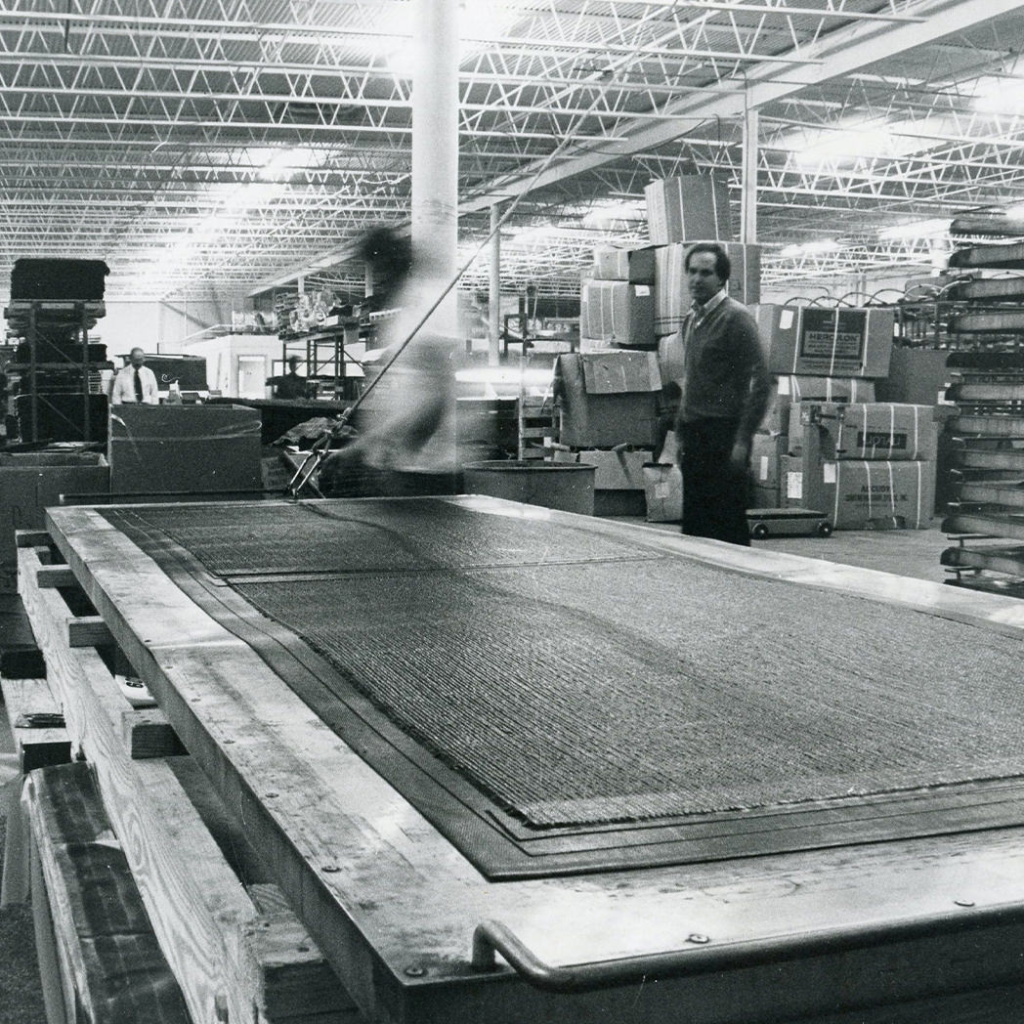
Dalton has been called the Carpet Capital of the World since the mid-twentieth century. The region produces roughly 75% of the world’s carpet and rug output, and its textile heritage stretches back more than a hundred years to the hand-tufted bedspreads that local women sold to passing motorists along Highway 41.
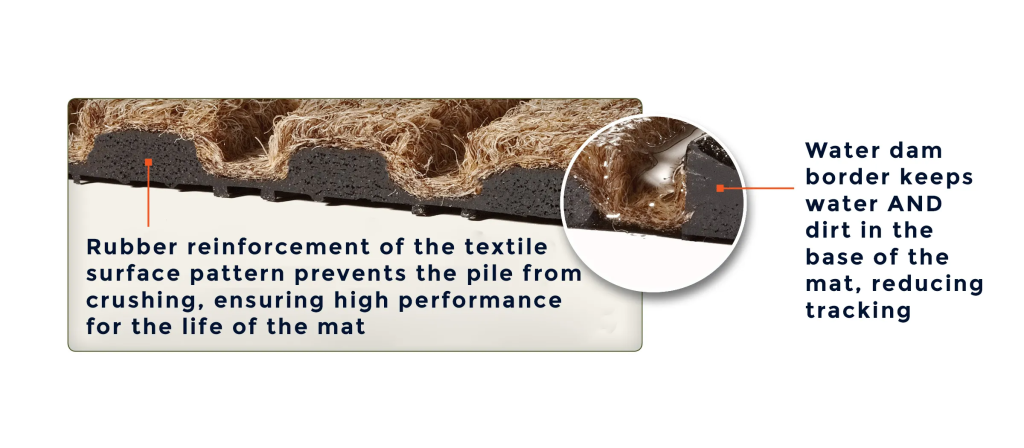
It was in this deep well of manufacturing knowledge that Andersen discovered a process for creating a molded product unlike anything before it. The design featured two layers backed by rubber. A raised top layer scraped dirt and moisture from shoes, while a recessed bottom layer captured and filtered debris below foot level. A rubber “water dam” border contained everything within the mat’s edges.
The WaterHog Squares Doormat is the direct descendant of that original design. It’s still manufactured in Georgia, still uses the same bi-level architecture, and still relies on rubber that the company produces in-house. Every mat carries NFSI certification for slip resistance and is made with recycled PET fibers that resist staining and fading. The materials are free of PVC, phthalates, formaldehyde, latex, and PFAS.
No Update Needed for Bi-Level Design
Most products get redesigned because the first version had shortcomings. A phone battery was too small, so the next model gets a bigger one. A vacuum couldn’t reach tight corners, so the next version adds new attachments. Products evolve because they’re imperfect.
The WaterHog bi-level concept addressed every aspect of what a doormat needs to do. The raised surface scrapes, the recessed channels trap, the rubber border contains, and the flat-lying backing stays put. There was nothing left to fix. While competitors have come and gone over four decades, cycling through materials and seasonal redesigns, WaterHog kept doing its job the same way it always had.
The Disposable Doormat Problem
Americans are surrounded by products designed to be outdated in a few years. The concept dates back to the 1920s, when General Motors began introducing annual model-year changes to push car owners toward buying new vehicles. Today, that strategy touches nearly every product category. The average smartphone lasts about 2.5 years, and American households spent nearly 80% more on major appliances between 2013 and 2023, according to the Bureau of Labor Statistics.
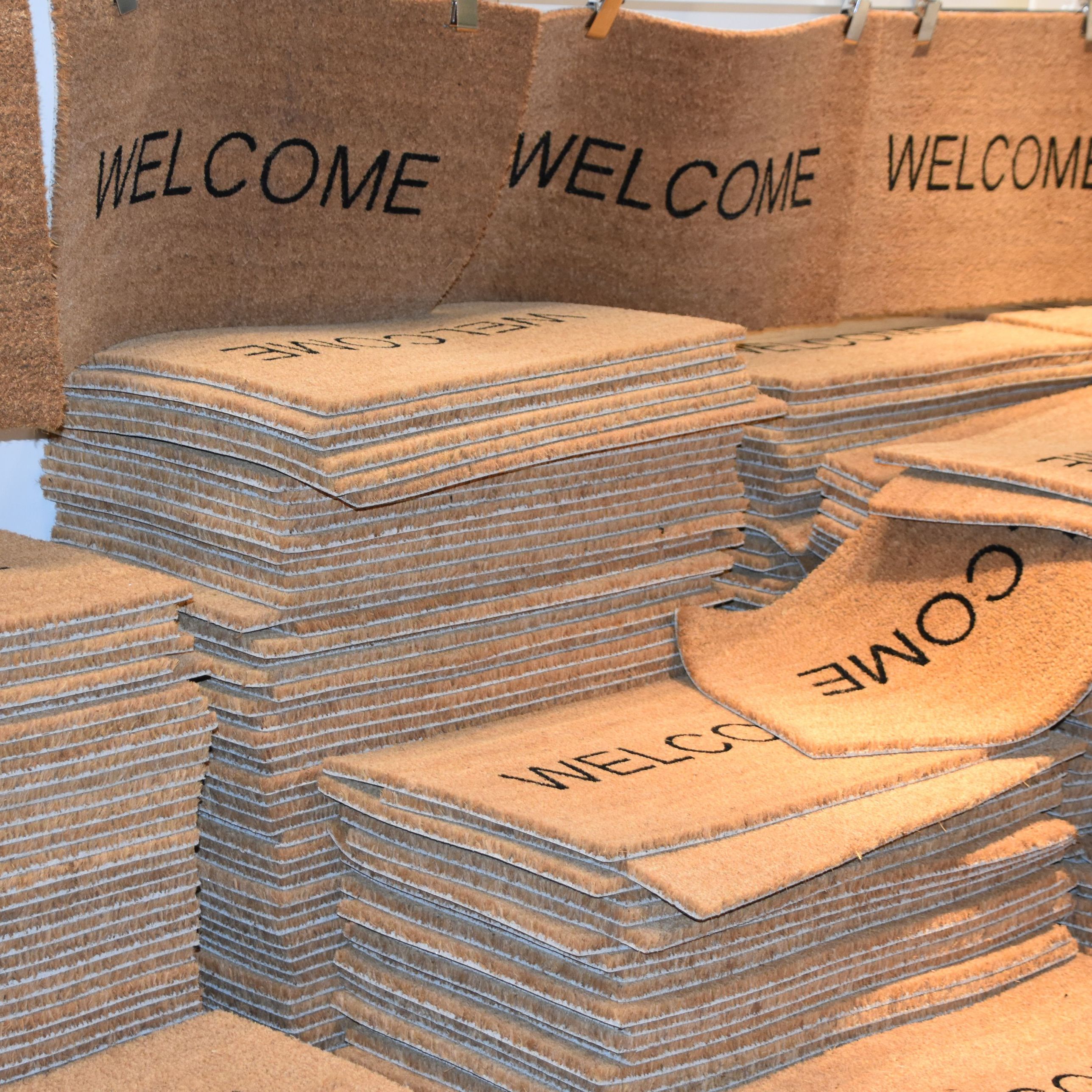
Doormats are no exception. The coco fiber mats that fill the aisles of big box stores look charming for a season or two before they begin to rot, shed, and crumble apart. They end up in landfills, and their owners end up back at the store. Not only is this painful for your wallet, but it’s also hard on the environment.
The WaterHog Squares Doormat is built to outlast not a single season but years and even decades of daily punishment.
Longevity That Speaks for Itself
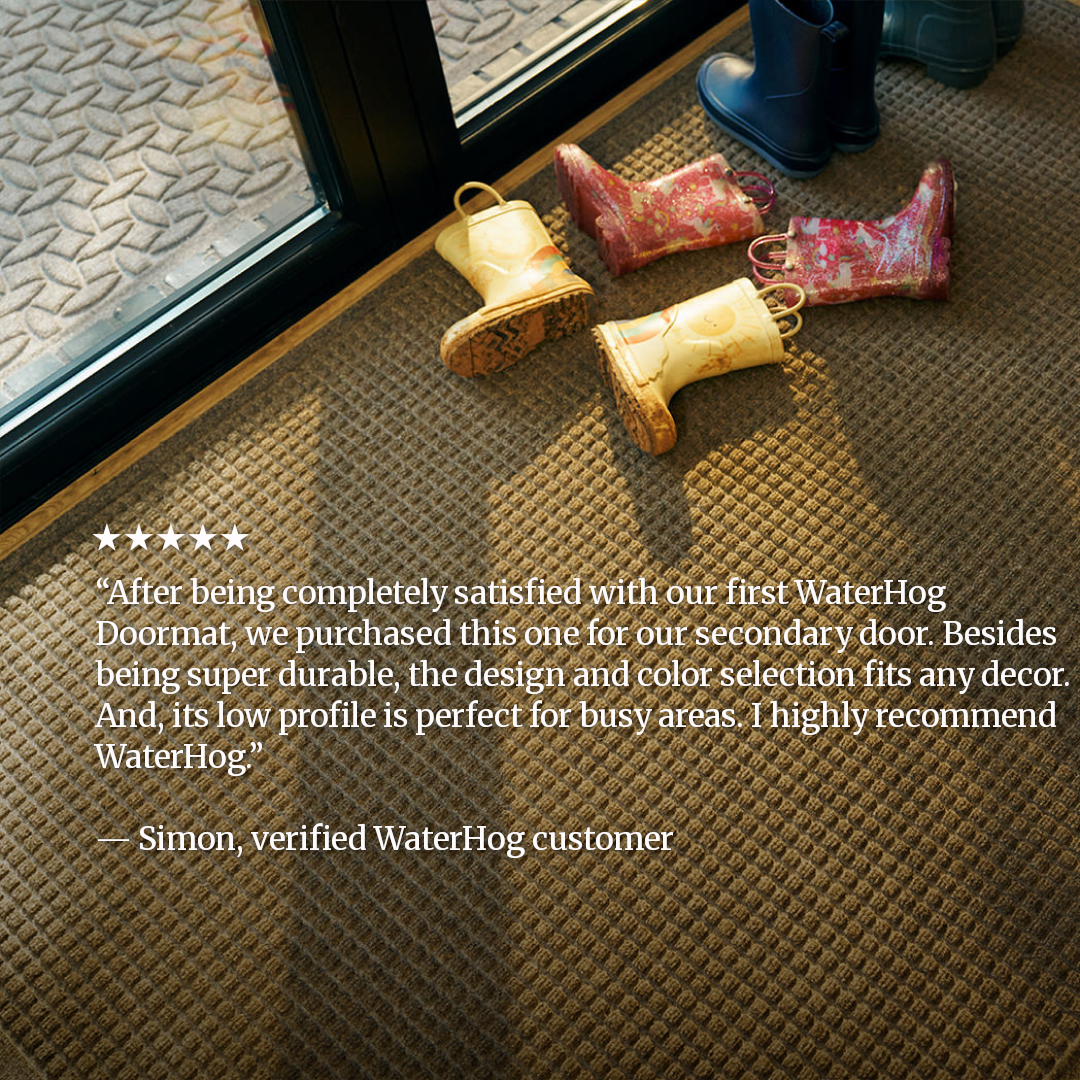
Spend a few minutes in WaterHog’s reviews and a pattern shows up fast. People measure these mats in years, not months. One owner shipped his family’s first WaterHog off to a new home after eight years of hiking boots, rain, and grandkids, then bought a second for himself. Another is on his fourth, not because the others wore out, but because he keeps finding new doorways worth protecting.
That’s the tell. You don’t buy a fourth of something that disappoints you.
Made in Georgia, Start to Finish

Every WaterHog mat is made in Dalton and LaGrange, Georgia, where the company produces its own rubber in-house. The people who make them earn a livable wage, comprehensive benefits, and a retirement plan with profit sharing.
A company that takes care of its people tends to take care of its product, too. That shows up in a mat built to last for decades, and in a partnership with L.L.Bean that has run more than 30 years. For a growing number of shoppers, that is exactly the kind of company worth buying from.
Products That Earn Their Place at the Front Door
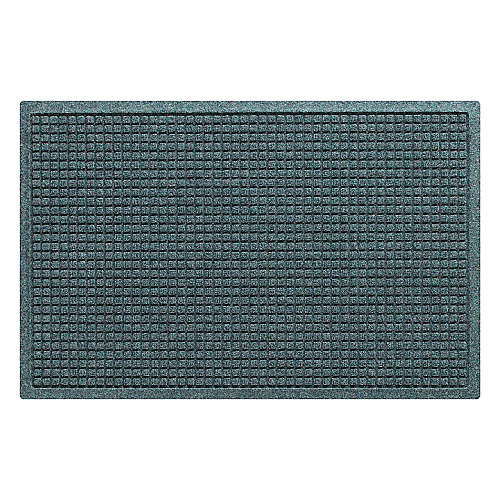
When a product stays virtually unchanged for nearly 40 years, the reasons are worth paying attention to. The WaterHog Squares Doormat has endured because its design was thoughtful from the very beginning, its materials are honest, and the people who build it believe in making something that lasts.
In a world that keeps telling consumers they need the newest version of everything, it’s refreshing to see a product that already got it right. And with dozens of designs and a wide range of colors and sizes across the collection, there’s a WaterHog to fit any home and taste. The Squares mat starts at $45 and ships free on orders over $50, so the one that fits your door is easy to find.
All details were verified at the time of publication and are subject to change without notice.





Leave a Comment
Your email address will not be published. Required fields are marked *