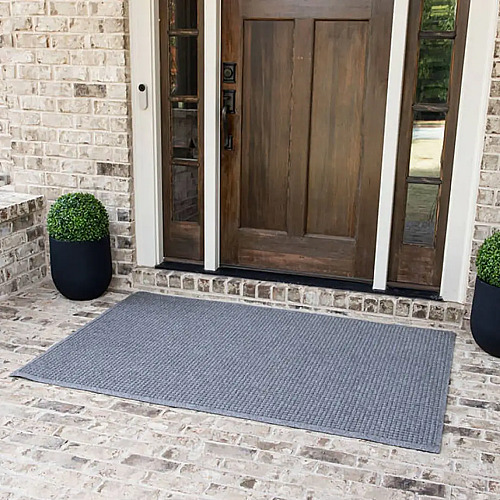
Staring at yet another disintegrating doormat got me thinking. This was the third cheap mat to fail me this year. Brown fibers straggled across the floors, backing cracking, edges curling, and an unpleasant smell that lingers no matter how much I hose it down. There has to be a better option!
I started researching premium doormats and kept seeing the WaterHog Squares Doormat. I looked up the price and nearly closed the browser. Forty-five dollars for a doormat? But the more I dug into the math, the more uncomfortable the truth became. Those cheap mats were costing more than $45 a year in replacements—or would if I replaced them every time they started looking like trash (or smelling like it). That’s not counting the time spent shopping and the guilt of tossing another doormat in the landfill every few months.
What Makes a Doormat Worth $45
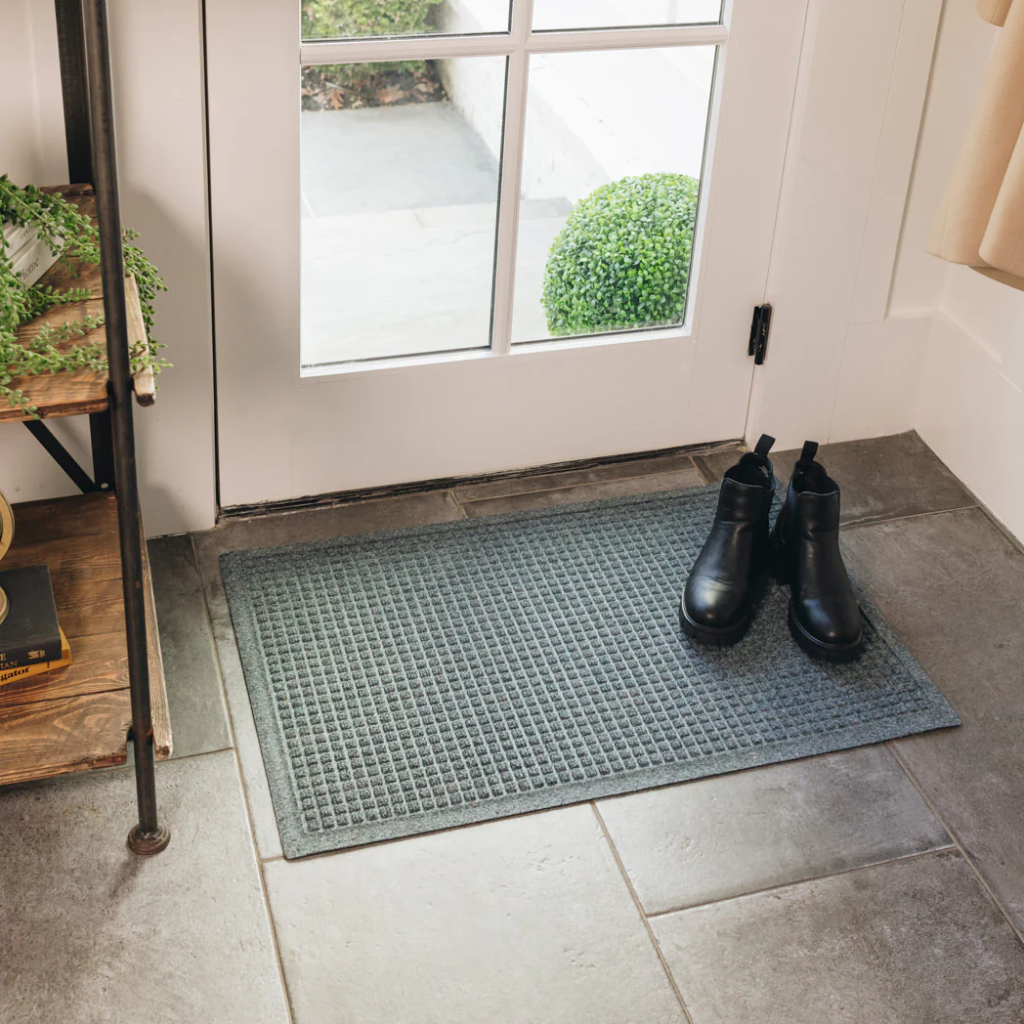
The WaterHog Squares Doormat is the original bi-level doormat, invented in 1986 by a Georgia company that clearly understood a doormat should trap dirt and water, not redistribute it around your entrance. The differences from those big box disappointments are substantial:
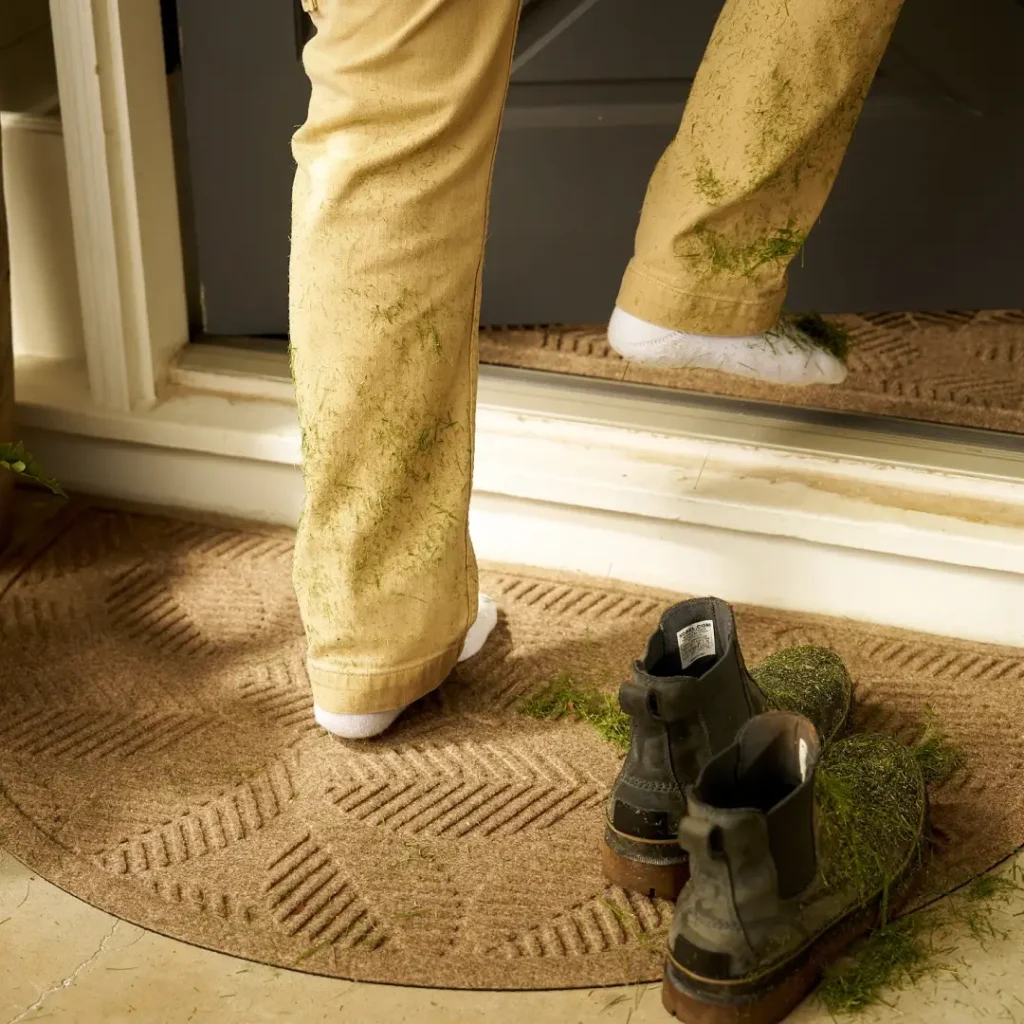
Bi-level technology scrapes dirt on the raised surface while trapping moisture in channels below foot level
Recycled PET fiber surface is permanently bonded to the rubber backing (no separation, cracking, or curling)
NFSI-certified grip keeps the mat in place without adhesives or mat anchors
Made in Dalton and LaGrange, Georgia, with quality control you can actually verify
Quick-drying and colorfast even after years of abuse
Free of PVC, phthalates, formaldehyde, latex, and PFAS (those “forever chemicals” you keep hearing about)
The Hidden Cost of Cheap Imports
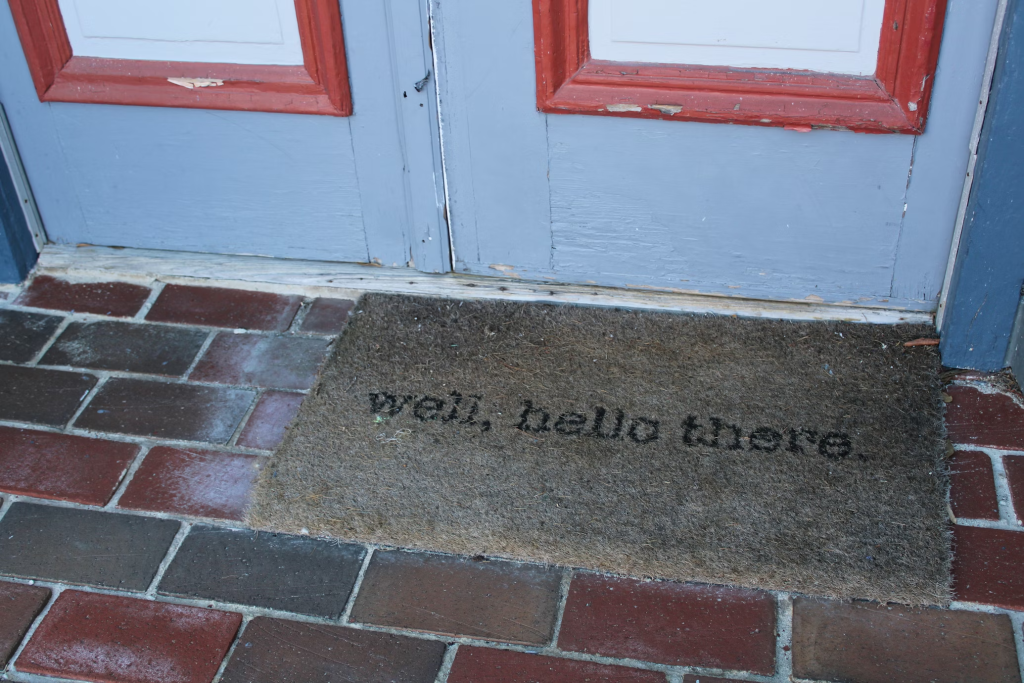
Those cheap doormats flooding big box stores come with costs that never show up on the receipt. They’re manufactured overseas under questionable conditions, treated with chemicals to prevent immediate deterioration, and backed with thin vinyl that cracks in cold weather and melts in heat. And they shed! That constant stream of brown fibers is literal evidence of the mat disintegrating beneath your feet. Maybe I’m just getting old and cranky, but it seems every product, no matter the category, is now a poorly constructed, toxic piece of junk that’s made to fail in a few months.
Uncompromising American Production
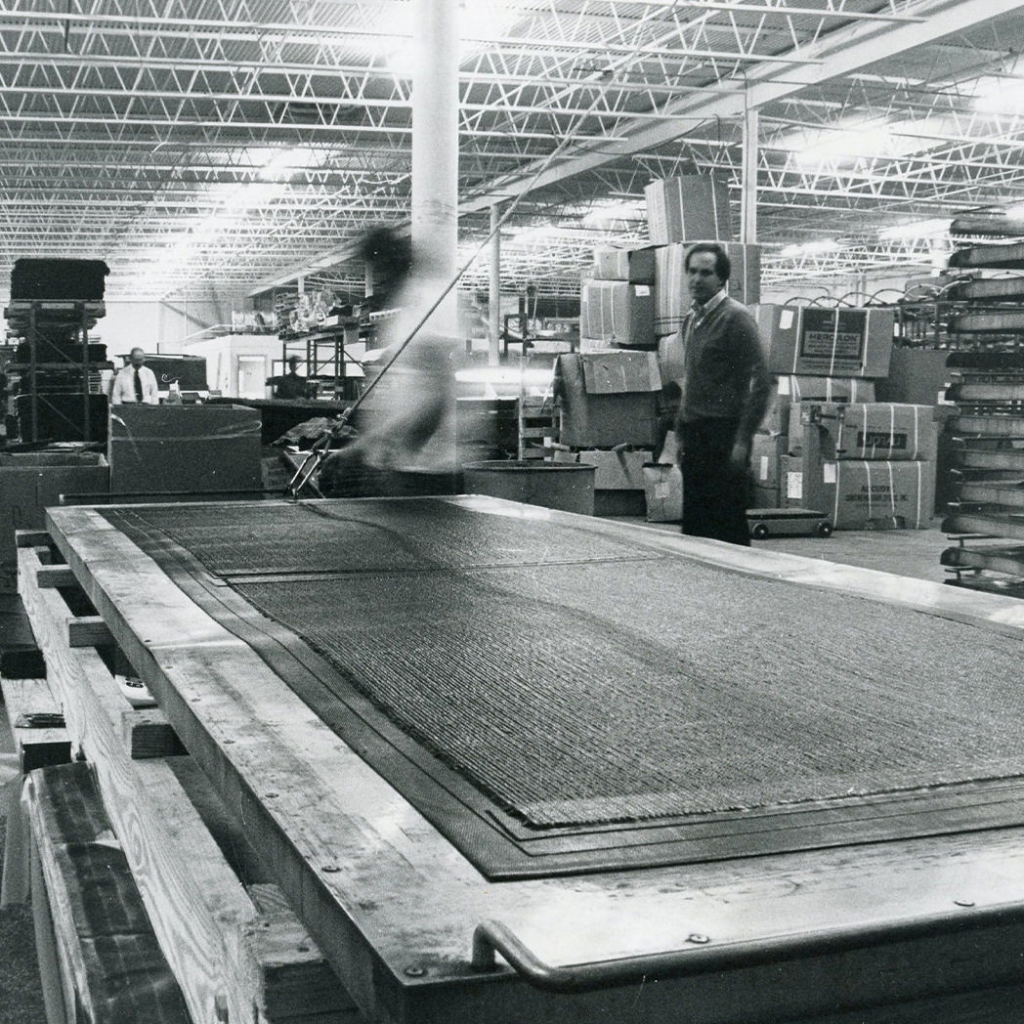
WaterHog manufactures its mats entirely in its Dalton and LaGrange, Georgia, facilities. The rubber backing is produced in-house and contains up to 20% recycled rubber. Unlike vinyl-backed alternatives that crack and rot, this rubber backing is formulated to last years. The surface fiber is permanently bonded to this rubber base through a manufacturing process refined since 1986, which eliminates the separation and peeling problems that happen with cheaper mats using adhesive methods.
The surface contains at least 90% recycled polyester sourced from plastic bottles. The bi-level design puts raised squares where your feet land to scrape off debris, while the lower channels catch and hold water underneath. This construction is why the mats can absorb so much moisture without feeling soggy. Every mat meets NFSI slip-resistance standards and is made without PVC, phthalates, formaldehyde, latex, or PFAS. American facilities mean OSHA compliance, environmental regulations, and fair labor standards throughout production.
Real Owners, Real Results
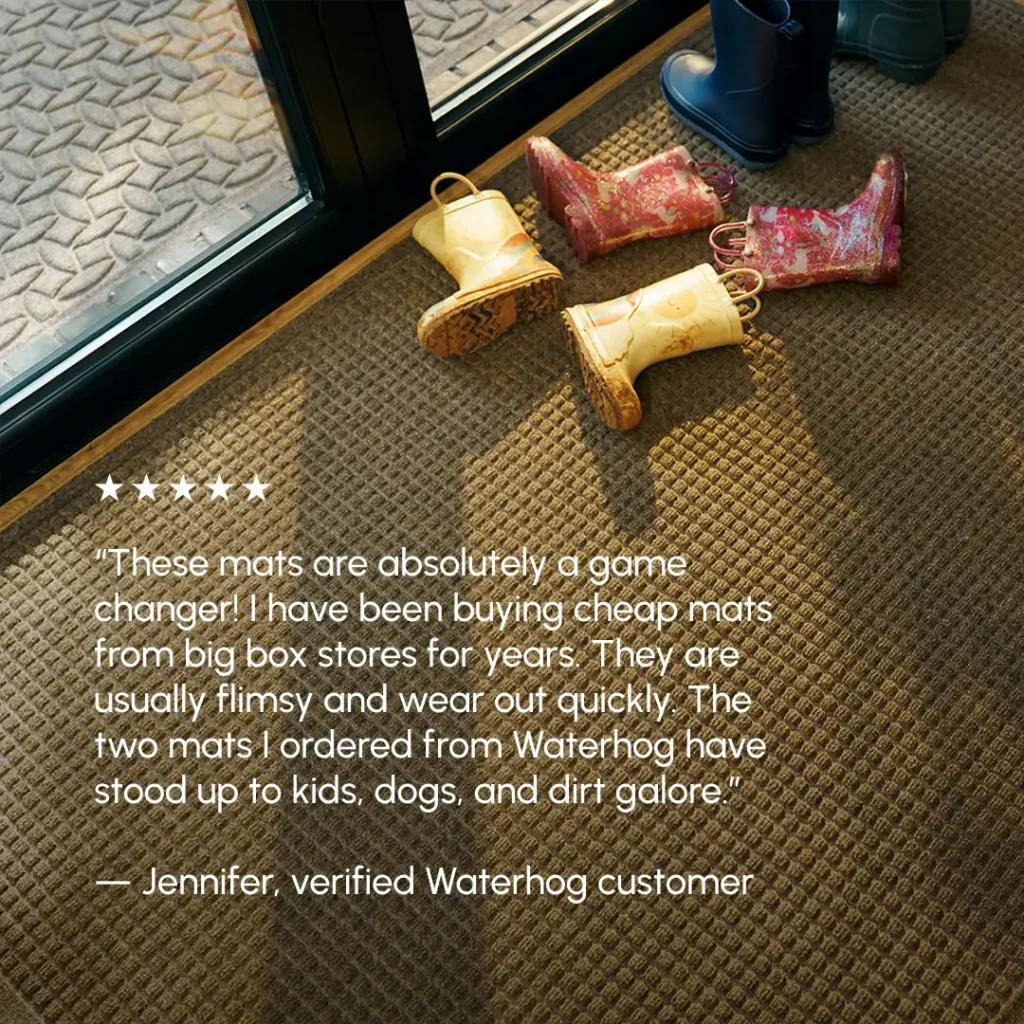
After digging through actual customer feedback, I saw that people weren’t just satisfied with their purchase. They were legitimately shocked by how long these mats lasted!
“After 9 years we just upgraded the color. Love them,” one customer wrote (not because the mat wore out, but because their taste changed).
Jennifer shared: “These mats are absolutely a game changer! I have been buying cheap mats from big box stores for years. They are usually flimsy and wear out quickly. The two mats I ordered from Waterhog have stood up to kids, dogs, and dirt galore.”
Meg summed it up well: “Texture is comfortable on bare feet, it’s low profile, edges don’t curl up, easy to pick up & clean – all around fabulous!”
The consistent themes kept appearing in review after review. The mat stays in place without corner grippers, it absorbs impressive amounts of water, and it looks the same years later as it did when first purchased.
The Company Behind the Product
Waterhog's customer service responses to reviews are refreshingly human. When a customer mentioned recently getting married, the company’s response was genuine: “Congrats on tying the knot! Secondly, on your 10-year anniversary, we want to see pics of you two standing on your WaterHog.” There’s no corporate jargon, just real pride in their product.
They’re not trying to be the cheapest option, and they’re upfront about it. Their tagline is literally “Designed to be Disrespected.” That kind of confidence only comes from knowing your product can take whatever abuse gets thrown at it. The company has been making the same product for four decades, and they’re genuinely proud of it… with good reason!
The Environmental Angle I Wasn’t Expecting

This wasn’t my primary motivation for the research, but it became impossible to ignore. Every cheap doormat ends up in a landfill within months. When a product lasts 10 years instead of three months, you’re eliminating 39 potential pieces of trash from landfills.
The free-from-chemicals commitment matters. No PVC, no phthalates, no formaldehyde, no latex, and no PFAS. Those substances show up in cheap imported mats because they’re cost-effective for manufacturers who prioritize price over safety.
The Verdict After Digging Into the Details
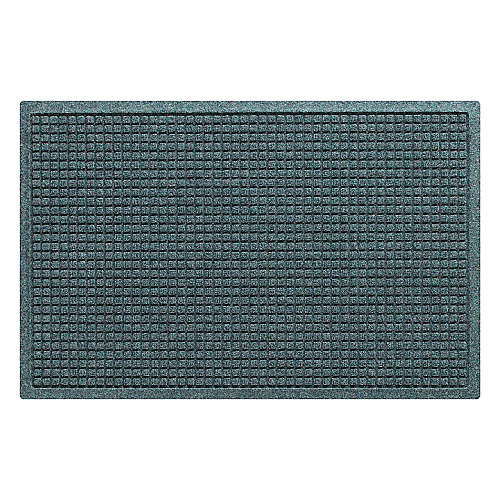
WaterHog
Squares Doormat
Before this research, spending $45 on a doormat seemed ridiculous. After examining the manufacturing process, analyzing the cost breakdown, and reading through customer reviews spanning decades, the picture changed completely for me.
The WaterHog Squares Doormat represents what manufacturing quality looks like when companies prioritize longevity over quarterly profits. The higher upfront cost reflects better materials, American workers with decent wages, and quality control throughout production. Sometimes paying more actually means spending less.
Ready to buy your last doormat?





Leave a Comment
Your email address will not be published. Required fields are marked *